
Key takeaways
- AMS affects 50 percent of climbers on rapid ascents; acclimatization protocols reduce incidence significantly but take time—plan for 2–3 days per 1,000 meters of elevation gain.
- HACE and HAPE are medical emergencies requiring immediate descent; pulse oximeters and field tests (ataxia check, SpO2 below 80 percent) help identify them early.
- Diamox reduces AMS incidence by approximately 50 percent when started 24 hours before ascent; supplemental oxygen becomes essential above 8,000 meters for most climbers.
Altitude sickness remains one of the most serious risks climbers face on high-mountain expeditions, yet it is also one of the most preventable. Unlike technical difficulty or weather, which can strike without warning, altitude sickness develops predictably as the body struggles to process less oxygen. Understanding how it affects your physiology, recognizing its symptoms, and implementing proven acclimatization protocols separates expeditions that summit from those that turn back.
How Altitude Affects the Human Body
At sea level, the atmosphere contains roughly 21 percent oxygen at a pressure of 760 millimeters of mercury. Every 1,000 meters (3,281 feet) of elevation gain reduces atmospheric pressure, meaning each breath delivers fewer oxygen molecules to your bloodstream. At 5,500 meters (18,045 feet), the pressure drops to about 50 percent of sea-level values. Above 8,000 meters (26,247 feet)—known as the death zone—atmospheric pressure falls so low that the human body cannot acclimatize, and survival depends on supplemental oxygen and rapid descent.
When you ascend faster than your body can adapt, your blood oxygen levels (measured as SpO2 by pulse oximetry) drop below normal ranges. A healthy sea-level SpO2 reads 95–100 percent; at Everest’s summit (8,849 meters), climbers operate at SpO2 levels around 30 percent. Your body compensates by breathing faster, increasing heart rate, and shifting fluid balance, but these adaptations take time—typically 2 to 3 days per 1,000 meters of elevation gain, though individual variation is substantial.
The Three Forms of Altitude Sickness
Acute Mountain Sickness (AMS)
AMS is the most common form and develops within 6 to 12 hours of arriving at elevation above 2,500 meters (8,200 feet). Symptoms include headache, fatigue, nausea, and shortness of breath—often dismissed as jet lag or poor sleep. The Lake Louise Consensus Criteria, the clinical standard for diagnosis, score AMS based on headache intensity plus at least one of the following: nausea, fatigue, dizziness, or sleep disturbance. On Kilimanjaro (5,895 meters), which climbers typically ascend in 5 to 8 days, roughly 50 percent of climbers report AMS symptoms; many descend because rapid ascent prevents adequate acclimatization.
AMS is reversible with rest and descent. Climbers who recognize symptoms early—persistent headache unrelieved by over-the-counter pain medication, nausea persisting after eating, unusual fatigue despite adequate rest—often recover within 24 hours at the same elevation or after descending 500 meters.
High Altitude Cerebral Edema (HACE)
HACE develops when severe hypoxia causes the brain to swell due to fluid accumulation. It is a medical emergency requiring immediate descent. Symptoms include severe headache, loss of coordination (ataxia—inability to walk in a straight line), confusion, and potentially loss of consciousness. HACE can develop within hours and is fatal if untreated. On Everest, HACE typically occurs above 7,000 meters and accounts for a portion of altitude-related deaths, though modern expedition practices and supplemental oxygen have reduced its incidence.
High Altitude Pulmonary Edema (HAPE)
HAPE is fluid accumulation in the lungs, triggered by hypoxia-induced pulmonary hypertension. Symptoms include persistent cough (often with pink or frothy sputum), extreme shortness of breath at rest, and a rapid respiratory rate. HAPE can develop in 6 to 12 hours and is fatal without descent and oxygen. Unlike AMS, HAPE can develop in otherwise healthy, acclimatized climbers, particularly those who ascend rapidly after recovering from illness or who have a genetic predisposition to the condition.
Acclimatization: The Foundation of Prevention
The Climb-High, Sleep-Low Principle
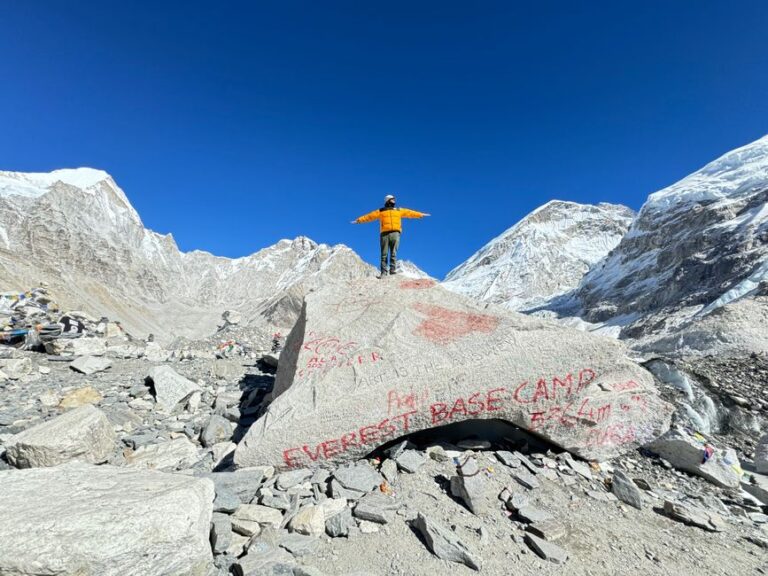
The most effective acclimatization strategy is gradual elevation gain. On Everest, commercial expeditions typically follow a schedule of base camp at 5,364 meters, Camp 1 at 6,100 meters, Camp 2 at 6,400 meters, Camp 3 at 7,400 meters, and Camp 4 in the death zone. This progression, spanning 5 to 7 weeks, allows the body to produce more red blood cells, increase oxygen uptake efficiency, and stabilize fluid balance. Climbers often climb higher during the day, then retreat to lower elevations to sleep—the “climb high, sleep low” strategy—to maximize stimulus for physiological adaptation while minimizing hypoxic stress during rest.
On Kilimanjaro, the standard Machame Route takes 6 days; climbers who rush it in 5 days report significantly higher AMS rates. Adding an extra acclimatization day at 4,700 meters before the final push to the summit at 5,895 meters substantially improves summit success and reduces illness severity.
Medications: Diamox and Dexamethasone
Acetazolamide (Diamox) is the most studied medication for AMS prevention. A typical prophylaxis dose is 125 milligrams twice daily, starting 24 hours before ascent and continuing for 2 to 3 days at altitude. Diamox works by acidifying blood, which stimulates respiration and accelerates acclimatization. Clinical trials show it reduces AMS incidence by approximately 50 percent. Side effects—tingling in fingers, toes, and lips; altered taste—are usually mild and resolve after stopping the medication.
Dexamethasone, a corticosteroid, treats established AMS or HACE at doses of 4 milligrams every 6 hours. Unlike Diamox, dexamethasone does not accelerate acclimatization; it masks symptoms temporarily while descent is arranged. It is a rescue medication, not a prevention tool.
Managing Altitude Sickness on Expeditions
Recognition and Descent Protocols
The critical decision on any high-altitude expedition is recognizing when symptoms warrant descent. Expedition guides and climbers often use simple field tests: the ataxia test (walk a straight line heel-to-toe; inability to do so suggests HACE), SpO2 measurement via pulse oximeters (which cost $25–$100 and are now standard on expeditions), and regular symptom checks via the Lake Louise Criteria.
The “golden rule” of altitude medicine is that any symptom suggesting HACE or HAPE demands immediate descent, regardless of weather, time of day, or proximity to the summit. On Aconcagua (6,961 meters), rescue teams have evacuated climbers from high camps at night due to HAPE symptoms; delays in descent have resulted in fatalities. Expeditions that enforce strict descent protocols—turning back climbers with severe AMS or any sign of HACE—have better safety records, even if summit success rates are slightly lower.
Oxygen and Supplemental Support
Above 8,000 meters, supplemental oxygen becomes essential for most climbers. Everest expeditions typically use bottled oxygen (aluminum or steel cylinders containing compressed air), with consumption rates of 1 to 3 liters per minute depending on exertion. A single cylinder weighs approximately 7 kilograms (15 pounds) and provides 5 to 8 hours of oxygen at standard flow rates. High-altitude camps (Camp 3 and Camp 4 on Everest) stockpile oxygen bottles via porter carries, adding substantial logistical complexity and cost ($3,000–$5,000 per bottle for guided expeditions).
Real-World Altitude Sickness Patterns by Peak
Kilimanjaro: Rapid Ascent, High Failure Rate
Kilimanjaro presents a unique challenge: its 5,895-meter summit is relatively low compared to other major peaks, yet climbers ascend from 1,800 meters to the summit in 5 to 6 days. This rapid elevation gain triggers AMS in approximately 50 percent of climbers. Operators who use the slower Lemosho Route (8 days) report AMS rates closer to 20 percent. The majority of climbers who develop severe AMS on Kilimanjaro descend before reaching the summit; annual summit success rates average 45–65 percent, with AMS as the primary limiting factor.
Aconcagua: High Altitude, Variable Acclimatization
Aconcagua (6,961 meters) in Argentina has become a proving ground for climbers preparing for Everest. The standard route ascends from base camp at 4,200 meters to the summit in 12 to 14 days, with acclimalization rotations through intermediate camps. Climbers with prior high-altitude experience (those who have summited peaks above 6,000 meters) report lower AMS incidence. However, rapid ascents (10 days or fewer) without intermediate acclimatization camps show AMS rates approaching 70 percent. Guided expeditions that enforce 2-day acclimatization rotations at 5,200 meters before the final push report summit success rates of 70–85 percent.
Everest: Death Zone Dynamics
On Everest, AMS is almost universal below 7,000 meters; the challenge shifts to managing HACE and HAPE in the death zone. Commercial expeditions with supplemental oxygen and high-altitude camps report HACE or HAPE incidence of 5–10 percent among climbers attempting the summit. Expeditions without supplemental oxygen or those with rapid deployment (summit attempts within 30 days of arrival base camp) see significantly higher rates of severe illness.
Monitoring and Equipment Essentials
A pulse oximeter is now considered mandatory on high-altitude expeditions above 4,000 meters. Devices like the Vicks-brand or medical-grade Masimo pulse oximeters ($40–$150) provide real-time SpO2 readings and heart rate, allowing guides to identify hypoxia trends and catch early signs of HACE or HAPE. A reading below 80 percent SpO2 at rest, combined with AMS symptoms or respiratory distress, warrants medical evaluation and likely descent.
Hydration and nutrition monitoring also matter. Dehydration worsens hypoxia and increases AMS risk; climbers at altitude should aim for 3 to 4 liters of fluid per day. Caloric intake should exceed 4,000 kilocalories daily at high elevations, where the body’s metabolic rate increases. Expeditions that provide high-calorie, palatable foods (high-fat items like nuts, peanut butter, cheese) report better nutrition compliance and fewer cases of severe AMS linked to malnutrition and dehydration.
Recovery and Long-Term Effects
After descent from altitude, AMS symptoms resolve within 24 to 48 hours at sea level. HACE and HAPE recovery is slower and may require supplemental oxygen and medical monitoring for days. Climbers who have experienced HACE or HAPE face a difficult choice on future expeditions: repeat high-altitude mountaineering with increased medical risk, or pursue lower-altitude objectives.
Research on repeated altitude exposure suggests that prior AMS does not protect against future episodes; some climbers remain susceptible across multiple expeditions, while others never develop significant symptoms. This individual variation means that pre-expedition tests (like rapid ascent to altitude before the main climb) can help predict individual risk, but no universal predictor exists.
Frequently Asked Questions
Can I prevent altitude sickness completely?
No, AMS affects roughly 50 percent of unacclimatized climbers at 5,500 meters. However, gradual ascent (climbing high, sleeping low), Diamox prophylaxis, and acclimatization rotations reduce incidence to 20 percent or lower. HACE and HAPE are rare with proper pacing and early descent protocols.
At what elevation does altitude sickness typically start?
AMS can develop above 2,500 meters (8,200 feet), though most climbers remain asymptomatic there. Symptoms become more common above 3,500 meters. HACE and HAPE typically occur above 6,500 meters and are rare below that elevation.
How do I know if my symptoms are serious enough to descend?
Use the Lake Louise Criteria: score yourself based on headache plus nausea, fatigue, dizziness, or sleep issues. Also check coordination (ataxia test—walk heel-to-toe); inability to maintain a line suggests HACE. Any persistent vomiting, severe confusion, or unusual breathing patterns warrant immediate descent. When in doubt, descent is always the safer choice.
