
Key takeaways
- Altitude reduces oxygen availability by 15–34% depending on elevation, forcing the body to produce more red blood cells—an adaptation that persists for 3–4 weeks after returning to sea level.
- Acclimatization requires 2–4 weeks; the optimal strategy involves reduced intensity in week one, hard training in weeks two and three, then timing a major sea-level event for 14–21 days after descent.
- Caloric and hydration needs increase 10–15% at altitude; match fluid intake to elevation and boost carbohydrate intake to 8–10 grams per kilogram of body weight daily.
- Real training locations—Pikes Peak (14,115 ft), Alpe d'Huez (1,860 m), Mont Ventoux (1,912 m), and Lake Tahoe (1,897 m)—offer established cycling infrastructure and progressive elevation bands for sustained blocks.
Altitude cycling training poses a physiology problem: the higher the elevation, the fewer oxygen molecules available in each breath. At sea level, air contains roughly 21 percent oxygen. At 5,000 feet (1,524 meters)—a moderate training altitude—oxygen availability drops 15 percent. At 10,000 feet (3,048 meters), it falls 34 percent. For cyclists, this compression of oxygen forces the cardiovascular and respiratory systems to work harder to deliver the same power, triggering adaptations that carry over when returning to sea level.
How Altitude Affects Oxygen Delivery and VO2 Max
The challenge at altitude is straightforward: each breath pulls in fewer oxygen molecules, so the heart must pump blood faster and breathing rates rise simply to maintain baseline intensity. Within a few days, the body begins compensating. The kidneys release erythropoietin (EPO), a hormone that signals bone marrow to produce more red blood cells. More red cells mean greater oxygen-carrying capacity in the blood. This adaptation—the core of altitude training—persists even after returning to sea level, where the same blood now delivers 15 to 20 percent more oxygen to muscles than it did before altitude exposure.
VO2 max, the maximum amount of oxygen a cyclist can utilize per kilogram of body weight per minute, typically improves modestly from altitude training. Studies of endurance athletes show gains between 1 and 3 percent after three to four weeks at 2,000 to 2,500 meters (6,500 to 8,200 feet). Higher elevations trigger larger adaptive signals but carry greater risk of overtraining and fatigue.
Acclimatization: Timeline and Physiological Stages
Acclimatization is not instantaneous. The first 48 to 72 hours at altitude are marked by acute mountain sickness (AMS) symptoms in some cyclists: headache, nausea, sleep disruption, and shortness of breath at rest. These signals reflect low blood oxygen (hypoxemia) and will ease as the body acclimates.
Week One: Acute Response
The initial week emphasizes recovery. Heart rate runs 10 to 20 beats higher at the same power output. Perceived exertion climbs. Many cyclists report poor sleep quality. Riding intensity should drop 20 to 30 percent of sea-level efforts. The goal is adaptation, not training stress.
Weeks Two and Three: Red Cell Production
By day 8, red blood cell production ramps up. Heart rate begins normalizing. Power output per heartbeat improves. This window, weeks two and three, is when structured training resumes. Threshold and sweet-spot efforts become productive again, though still slightly dampened compared to sea level. Most athletes find this phase optimal for the training adaptation-benefit ratio.
Week Four and Beyond: Gains and Diminishing Returns
Acclimatization plateaus around week three to four. Extended stays—six weeks or longer—provide marginal additional gains but increase injury risk and psychological fatigue. Competitive cyclists typically spend three to four weeks at altitude before a major sea-level event, timing their return for peak oxygen-carrying capacity at the target event.
Training Protocols: Live High, Train Low vs. Sea-Level Prep
Two strategies dominate altitude training for cyclists. The choice depends on event timing, logistics, and access.
Live High, Train Low (LHTL)
This protocol maximizes adaptation by sleeping at high altitude (2,000 to 2,500 meters, or 6,500 to 8,200 feet) where red cell production is stimulated, then training at moderate or lower elevations where power output remains near sea-level levels. The rationale: high elevation triggers EPO release; moderate elevation allows hard training without fatigue accumulation.
LHTL requires access to a location with residential elevation and nearby lower-altitude routes. The French Alps near Albertville offer this naturally—towns sit at 400 to 800 meters with climbs into the 2,000-meter range within 30 kilometers. Similarly, the Boulder, Colorado, area (1,655 meters) pairs with lower rides toward Denver and plains routes. Athletes without geographic access use altitude tents or hypoxic chambers, which simulate low oxygen availability while sleeping at home.
Sea-Level Training Then Altitude Arrival
Alternatively, cyclists complete the bulk of training at sea level, then arrive at altitude 10 to 14 days before a target event. This approach works for one-off events (a stage race at elevation) and suits athletes without consistent altitude access. The first week at altitude is recovery; week two pairs acclimatization with moderate intensity. By race day, the athlete is acclimatized and the return-to-sea-level window (typically 2 to 3 weeks) has not yet begun, preserving the red-cell advantage.
Nutrition and Hydration at Altitude
Altitude amplifies caloric demand. The body burns 10 to 15 percent more calories at rest due to the metabolic cost of breathing harder and maintaining oxygen homeostasis. Carbohydrate becomes more critical because altitude preferentially increases reliance on anaerobic metabolism—fat oxidation efficiency drops. Cyclists should aim for 8 to 10 grams of carbohydrate per kilogram of body weight daily during altitude training, up from the typical 6 to 8 grams at sea level.
Hydration needs rise sharply. Altitude increases respiratory water loss (each breath excretes water as vapor), even when environmental humidity is low. Urine output often darkens, signaling dehydration despite equivalent drinking. A practical target: drink to urine color (pale yellow), not thirst. On the bike, match fluid intake to the elevation: a 3,000-meter climb may require 750 to 1,000 milliliters of fluid per hour, versus 500 to 750 at sea level for the same duration.
Iron intake warrants attention. Red cell production demands iron. A pre-altitude training blood test (checking ferritin levels) identifies deficiency before it constrains adaptation. Dietary iron from lean meats, spinach, and legumes suffices for most; supplementation is unnecessary unless testing shows depleted stores.
High-Altitude Cycling Routes and Destinations
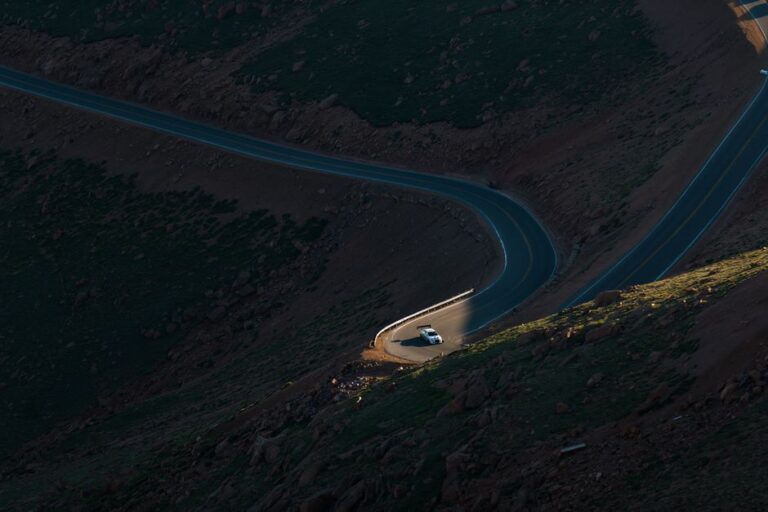
Pikes Peak, near Colorado Springs, rises 14,115 feet (4,302 meters) and hosts the Pikes Peak International Hill Climb, an annual 10.18-mile time trial held each summer. The elevation gain from the valley floor to summit totals 7,815 feet; the road averages 7.2 percent gradient. Most cyclists train on partial ascents—Mount Manitou Park loop (40 kilometers, 1,800 meters climbing) or Monument Valley Park circuits—rather than the full climb, given the thin air and remote exposure above 11,000 feet.
Alpe d’Huez in the French Alps climbs 1,860 meters over 13.8 kilometers, famous for its 21 switchbacks and hosting a pivotal Tour de France stage nearly every year. The surrounding Oisans region sits at 600 to 1,000 meters base elevation, offering a genuine LHTL environment: sleep in Bourg d’Oisans (720 meters) and ride to Col de la Loze, Col du Télégraphe, or the Galibier, all north of 2,600 meters.
Mont Ventoux, near Bedoin in Provence, reaches 1,912 meters and is cycled from three approaches; the mountain road is paved throughout. The climb from Bedoin spans 21.6 kilometers at 7.4 percent average gradient. The summit is exposed and can turn dangerous in wind; most training camps use lower portions of the climb (Chalet Reynard, 1,432 meters) for intensity work.
In the United States, Timberline Trail circles Mount Hood in Oregon at elevations between 6,000 and 10,000 feet, offering a 60-kilometer loop on mixed pavement and gravel. Lake Tahoe, straddling Nevada and California, sits at 1,897 meters with multiple loops and climbs totaling 1,000 to 1,500 meters per session.
Monitoring and Recovery Gear
Power meters become essential at altitude. On a hilly 200-kilometer day at sea level, a cyclist might sustain 280 watts. At 2,000 meters, the same athlete can sustain perhaps 240 watts at similar perceived exertion. Without power data, it is easy to overtrain, mistaking the fatigue of altitude for a sign of fitness. Stages Power Meter (crank-based) and SRAM quarq are standard choices; both transmit to Wahoo Elemnt or Garmin Edge computers, allowing real-time power and heart-rate pairing.
Sleep quality is the largest single factor in altitude adaptation. Hypoxemia disrupts sleep architecture, reducing deep-sleep time. A white-noise machine or earplugs may help. Magnesium supplementation (400 to 500 milligrams, taken 1 to 2 hours before sleep) has modest evidence for improving sleep quality at altitude. Some athletes report better sleep when keeping the bedroom cool (60 to 65 degrees Fahrenheit).
Massage and stretching accelerate recovery. The metabolic stress of altitude training stiffens muscles and elevates lactate production. Daily 20-minute stretching sessions and weekly deep-tissue massage (or self-massage with a foam roller) noticeably reduce soreness and maintain range of motion.
Returning to Sea Level: The Performance Window
The window of benefit after altitude exposure is short and predictable. Within 3 to 4 weeks of returning to sea level, red blood cell adaptation decays. The peak performance window is approximately days 14 to 21 after descent. Cyclists should target their A-race (most important event) to fall within this window, planning the altitude block end-date accordingly. Arriving home 10 days before a major event and racing day 21 after altitude departure aligns descent timing with the peak-benefit window.
Frequently Asked Questions
How long does it take to acclimatize to altitude for cycling?
Most cyclists acclimatize within 2–3 weeks at elevations between 2,000 and 2,500 meters (6,500–8,200 feet). The first week involves reduced training intensity due to acute mountain sickness symptoms; weeks two and three see improved power output and cardiovascular efficiency. Beyond week four, physiological gains plateau and injury risk rises.
Can I train hard on my first days at altitude?
No. Heart rate runs 10–20 beats higher at the same power output, and hypoxemia disrupts sleep and cognition. Reduce training intensity 20–30% during the first week to allow adaptation. Hard training should resume in week two when acclimatization is established and perceived exertion normalizes.
How long does the performance benefit from altitude training last after returning to sea level?
Red blood cell adaptation decays within 3–4 weeks of returning to sea level. The peak performance window is approximately 14–21 days after descent. Time major events to fall within this window by scheduling your altitude block to end 10–21 days before the target race.
