
Key takeaways
- Most first-time bikepacking trips range from 100 to 300 miles over 4 to 7 days on established routes with water and resupply every 40 to 80 miles.
- A capable bikepacking bike weighs 25 to 35 pounds fully loaded and distributes gear across frame bags, seat packs, and handlebar rolls for stable handling.
- Begin training 8 to 12 weeks ahead with 50–80 miles per week on varied terrain, including at least two multi-day practice trips before departure.
- Establish camp by 5–6 PM near reliable water sources, cook early, and check weather forecasts at towns to adapt to rapid seasonal weather shifts.
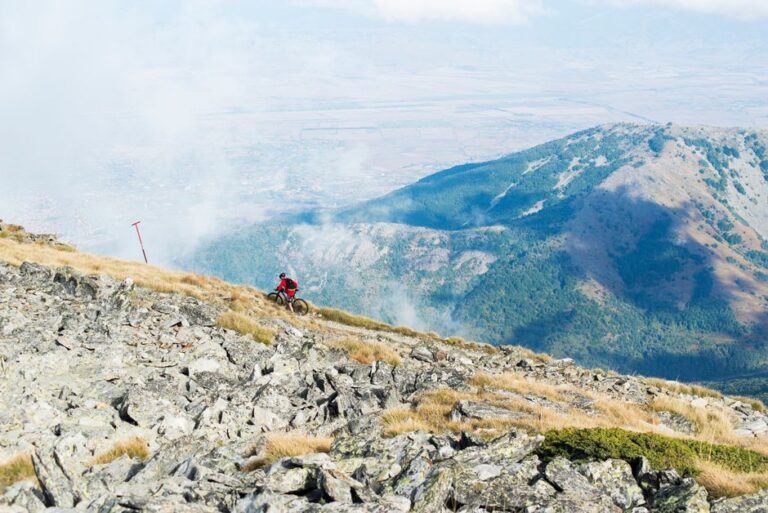
Bikepacking combines cycling and backcountry camping, with your bicycle serving as the primary transport and sleeping system over multiple days. Unlike bike touring with its infrastructure of campgrounds and towns, bikepacking distributes gear across lightweight frame bags, seat packs, and handlebar rolls to keep handling responsive on off-road terrain. Most first-time trips span 100 to 300 miles over 4 to 7 days.
Choosing Your First Route
Route research starts on platforms dedicated to bikepacking. Bikepacking.com catalogs over 500 established routes with reviews, difficulty ratings, and elevation profiles. Komoot, an offline-capable app, filters routes by distance, elevation gain, and terrain type. Singletracks.com specializes in mountain bike routes with detailed beta on technical sections and seasonal conditions.
For a debut trip, prioritize routes with water sources every 40 to 60 miles and towns every 80 miles. The White Rim Trail near Moab, Utah covers 100 miles over 4 days with established camps at Mile 23, Mile 50, and Mile 86; water comes from creeks and potholes. The Badlands Loop in South Dakota spans 100 miles in 3 to 5 days with resupply at Wall and Prairie City. Both routes suit competent intermediate cyclists.
Permits and Seasonal Timing
Check permits early. The Great Divide Mountain Bike Route (2,700 miles from British Columbia to New Mexico) requires no permits for most segments, though certain wilderness areas mandate free self-registration or per-day fees ($5 to $10). Spring (April–May) and autumn (September–October) offer the most stable weather. Summer exceeds 95°F in deserts with scarce water; winter snow above 8,000 feet can strand cyclists.
Scout Water and Resupply
Download offline maps and mark water sources by reliability. Spring water from established sources is safe; creeks and open ponds require filtering. Identify which towns offer hot food and grocery resupply versus vending machines only. Many bikepacking routes pass small communities where shops close by 5 PM, making arrival timing critical.
The Right Bike and Essential Gear
The ideal bikepacking bike balances carrying capacity with handling on uneven terrain. Hardtail mountain bikes (26, 27.5, or 29-inch wheels) or gravel bikes with 45 mm tire clearance work well. The Trek 920 weighs 27 pounds bare and accommodates 2.4-inch tires. The Surly Karate Monkey accepts 29-inch tires and costs $700 to $900 for the frameset. Both bikes mount frame bags and large water bottles.
Target total bike-plus-gear weight of 25 to 35 pounds. Pack distribution matters more than raw weight. Frame bags (mounted low) keep the center of gravity stable; seat packs placed above the rear wheel minimize handling changes. A handlebar roll provides easy access to layers and navigation tools.
Sleeping and Shelter Systems
A lightweight tent (2–3 pounds), sleeping bag (20–40°F rated), and inflatable pad form the core system. Season determines bag rating: spring and autumn need 20–30°F; summer at high elevation may need 10°F. A pad costs $50 to $150. Ultralight tents (under 3 pounds) run $200 to $400; modest options cost $100 to $200.
Pack and Attachment Systems
Frame bags ($80–200) attach to the main triangle and hold tools, spare parts, and heavy items. Seat packs ($60–120) strap beneath the saddle for clothing and sleeping bag. A handlebar roll ($40–80) stores a puffy jacket and rain layer. Bikepacking brands like Restrap, Oveja Negra, and Apidura dominate, though generic waterproof bags work if sized correctly.
Navigation and Logistics Planning
Pre-load your route onto offline mapping software. Komoot stores entire regions and provides turn-by-turn guidance without cellular signal. Paper maps (1:100,000 scale) are a backup, weighing under an ounce per region. Mark water sources, towns, and potential camps on digital and paper maps before departure.
Calculate daily distances based on terrain gradient and fitness. A fit cyclist covers 50–60 miles on flat terrain but manages 30–40 miles if the route includes significant climbing or technical sections. Aim to arrive at camp by 5–6 PM for daylight setup and to avoid arriving at water sources after dark.
Physical Preparation and Pacing
Begin training 8 to 12 weeks before departure. Build base fitness of 50 to 80 miles per week on varied terrain. Perform at least two multi-day practice trips, starting with 2-day outings covering 40–60 miles per day, progressing to 3–4 days if your planned trip is longer.
Load testing is essential. Pack your gear and ride fully loaded for at least one full day to identify chafing, balance issues, and weight distribution problems. Ride loaded on terrain similar to your planned route: gravel roads if mostly gravel, singletrack if technical descents.
Caloric demand climbs to 3,500 to 4,500 calories per day depending on terrain and pace. Carry lightweight, calorie-dense foods: nuts, energy bars, dehydrated meals, and dried fruit. Fresh resupply at towns every 50–80 miles allows heavier foods like sandwiches rather than relying entirely on portable rations.
Camp Management and Water Strategy
Locate camp near a reliable water source but at least 100 feet away to avoid contaminating downstream water and wildlife. Filter or treat all water before drinking or cooking. Boiling takes 1 minute at sea level and 3 minutes above 6,500 feet; pump filters and chemical treatments are faster and lighter.
Cook dinner by 7 PM to avoid late-night setup. Hanging food is unnecessary on multi-day trips, but securing garbage prevents odors from attracting raccoons and bears. Leave no trace: pack out all trash, place human waste 200 feet from water (dig a cathole and cover it), and soap or toothpaste equally far away.
Weather Readiness and Contingency Planning
Check a 10-day weather forecast immediately before departure and again at resupply towns. Autumn and spring bring rapid shifts; snow above 8,000 feet can occur in late September and early May even in regions that feel mild below. A layered system—base layer, insulating mid-layer, and waterproof shell—handles the 40–70°F swings common in these seasons.
Identify bail-out points where you can hitchhike to town if illness, injury, or weather forces an early exit. Most established routes pass roads or towns every 50–80 miles. Carry emergency contact information on a waterproof card and a basic first aid kit including blister treatment, pain relievers, and any personal medications.
Frequently Asked Questions
How many miles should a first bikepacking trip cover?
Most first-time trips span 100 to 300 miles over 4 to 7 days on established routes with regular water and resupply points no more than 80 miles apart.
What is the ideal weight for a bikepacking bike with all gear?
Target total bike-plus-gear weight of 25 to 35 pounds, with pack distribution managed through frame bags mounted low for stability, seat packs positioned above the rear wheel, and handlebar rolls for accessible items.
How should I train for a multi-day bikepacking trip?
Build base fitness 8 to 12 weeks ahead with 50–80 miles per week on varied terrain, then complete at least two multi-day practice trips (starting with 2-day, 40–60 mile outings) while riding fully loaded on terrain matching your planned route.
